Prevention of Torture Loading
Skip to content
Primary Menu
  • Home
  • Torture
  • Police
    • Méndez Principles
    • Fair Policing
  • Prisons
    • Penal Statistics
      • The Ukrainian Prison and Probation Policy (1991 – 2024): Modulations and Key Indicators
    • Human rights standards
      • Mandela Rules
    • Prison subculture
      • Prison Hierarchies. Facts. News. Research
  • Wartime Crisis Mode
  • Police Standards 2025
  • Articles
  • Categories
  • Home
  • Torture
  • Police
    • Méndez Principles
    • Fair Policing
  • Prisons
    • Penal Statistics
      • The Ukrainian Prison and Probation Policy (1991 – 2024): Modulations and Key Indicators
    • Human rights standards
      • Mandela Rules
    • Prison subculture
      • Prison Hierarchies. Facts. News. Research
  • Wartime Crisis Mode
  • Police Standards 2025
  • Articles
  • Categories
Prevention of Torture

Standards. Case Law. Approaches. Opinions

Day: 6 July 2026

  • Home
  • 2026
  • July
  • 6
#Case law #Council of Europe #ECtHR #Europe #European Court of Human Rights #Prevention of torture #Russia #Russian invasion of Ukraine #Torture #Torture prevention #Ukraine #Victims of torture #War #War crimes #Дмитро Ягунов

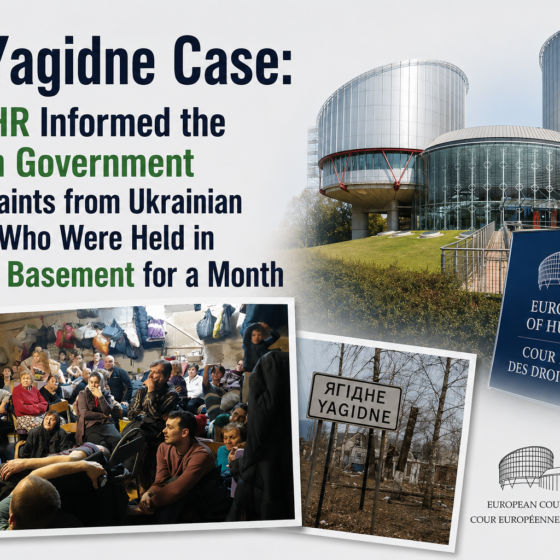
The Yagidne Case: The ECHR Informed the Russian Government of Complaints from Ukrainian Civilians Who Were Held in a School Basement for a Month

06.07.202606.07.2026 By Yagunov

The European Court of Human Rights has served the Russian Government with the applications in Menyaylo and Others v. Russia and Lepekha and

Continue Reading
Load More Posts
Right to Liberty

Авторські права на структуру сайту та матеріалу сайту належать Дмитру Ягунову. Авторські права на зображення та фотографії належать авторам таких зображень та фотографій. Сайт жодним чином не відображає позицію Ради Європи, ЄКЗК або ЄСПЛ.

This site contains the opinions expressed solely by the author’s and does not reflect the opinions and official positions of the Council of Europe, the CPT or the ECtHR

Die Website spiegelt in keiner Weise die Position des Europarats, des Europäischen Komitees zur Verhütung von Folter oder des Europäischen Gerichtshofs für Menschenrechte wider