Instrumentalisation of Migration, Ill-Treatment, and Deviant States
Contemporary migration crises – whether controlled, provoked, or spontaneously unfolding – arguably provide the most illustrative empirical material for studying the erosion of
Standards. Case Law. Approaches. Opinions
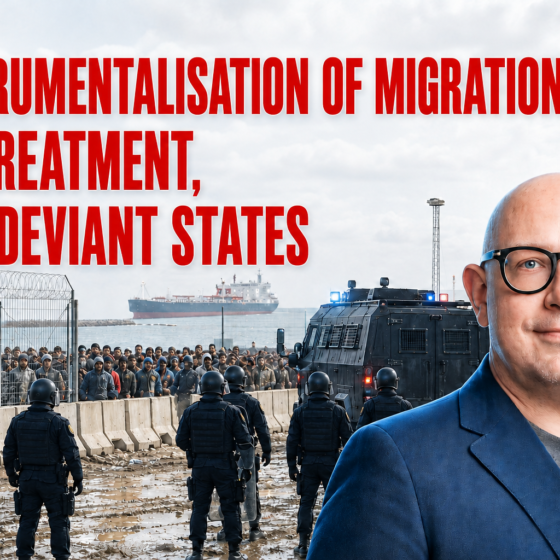
Contemporary migration crises – whether controlled, provoked, or spontaneously unfolding – arguably provide the most illustrative empirical material for studying the erosion of
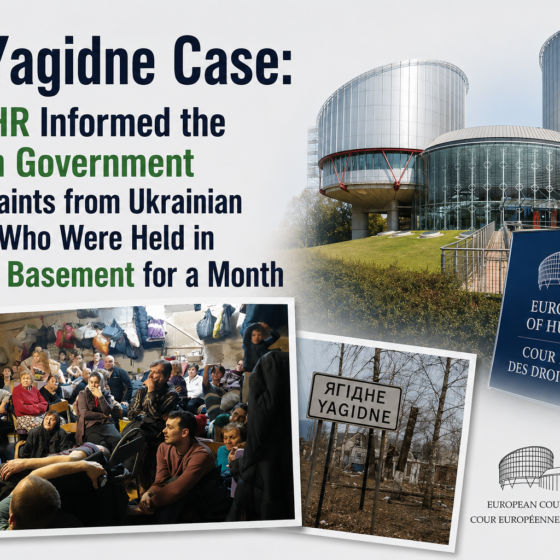
The European Court of Human Rights has served the Russian Government with the applications in Menyaylo and Others v. Russia and Lepekha and
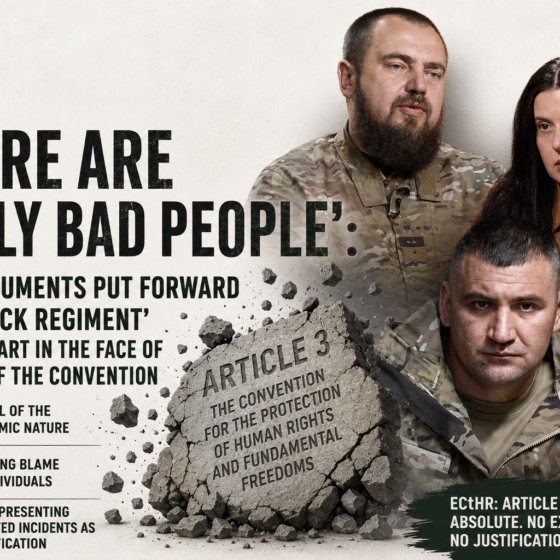
Radio Svoboda (Radio Liberty), in its programme “Svoboda Live”, released a conversation with Andrii Surai, head of the civil-military cooperation group of the

Solitary confinement – the isolation of a prisoner from meaningful human contact for twenty-two or more hours per day – remains one of

The European Committee for the Prevention of Torture and the European Court of Human Rights in collaboration with the Eberhard Karls University Tübingen

1. The applicant alleges that he belonged to the lowest caste of “pariahs” in the informal hierarchy that, according to him, prevails in

On 30 April 2026, the European Court of Human Rights delivered its judgment in Sklyarenko v. Ukraine. The Fifth Section unanimously found a

2 April 2026, the European Court of Human Rights delivered its judgment in Ukrayinskyy and Others v. Ukraine — 42 applicants, correctional colony

