 0
0
 0
0
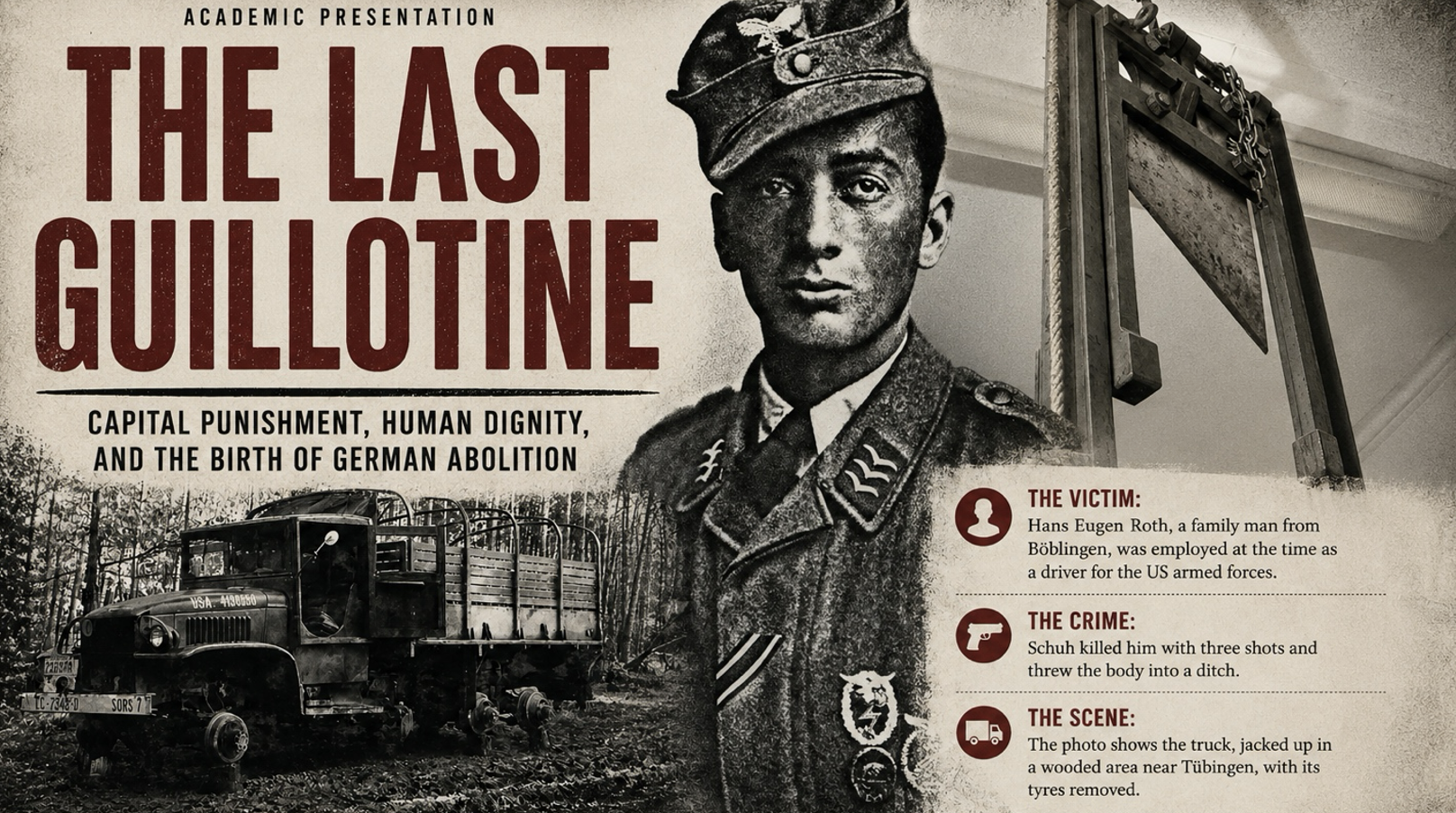
Richard Schuh (born 2 October 1920 in Remmingsheim; died 18 February 1949 in Tübingen) was a robber-murderer and the last criminal to be executed by the West German justice system (excluding West Berlin).
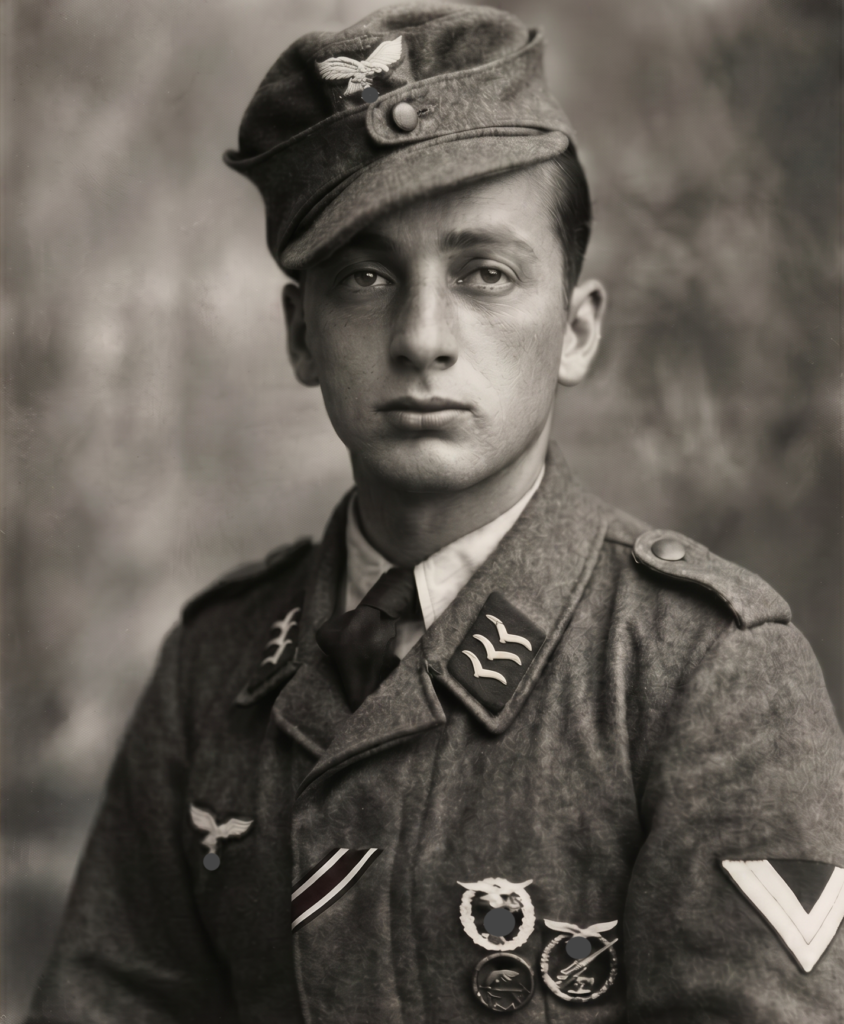
Schuh was a trained mechanic who had served in the Luftwaffe during the Second World War and was later taken prisoner by the Americans.
After his release, he scraped by doing odd jobs. Before the currency reform of 1948, the Reichsmark had lost its central monetary functions.
As he found it difficult to make a living in this way, on 28 January 1948 he murdered a lorry driver near Herrenberg in order to get hold of the new tyres from his vehicle and sell them on the black market.
The victim was Hans Eugen Roth, a family man from Böblingen who, at the time of his murder, was working as a driver for the United States armed forces. Richard Schuh shot him three times and callously disposed of his body in a roadside ditch.
The photograph captures the abandoned truck, jacked up in a wooded area on the outskirts of Tübingen, its tyres stripped and removed – a grim trace of what had taken place.
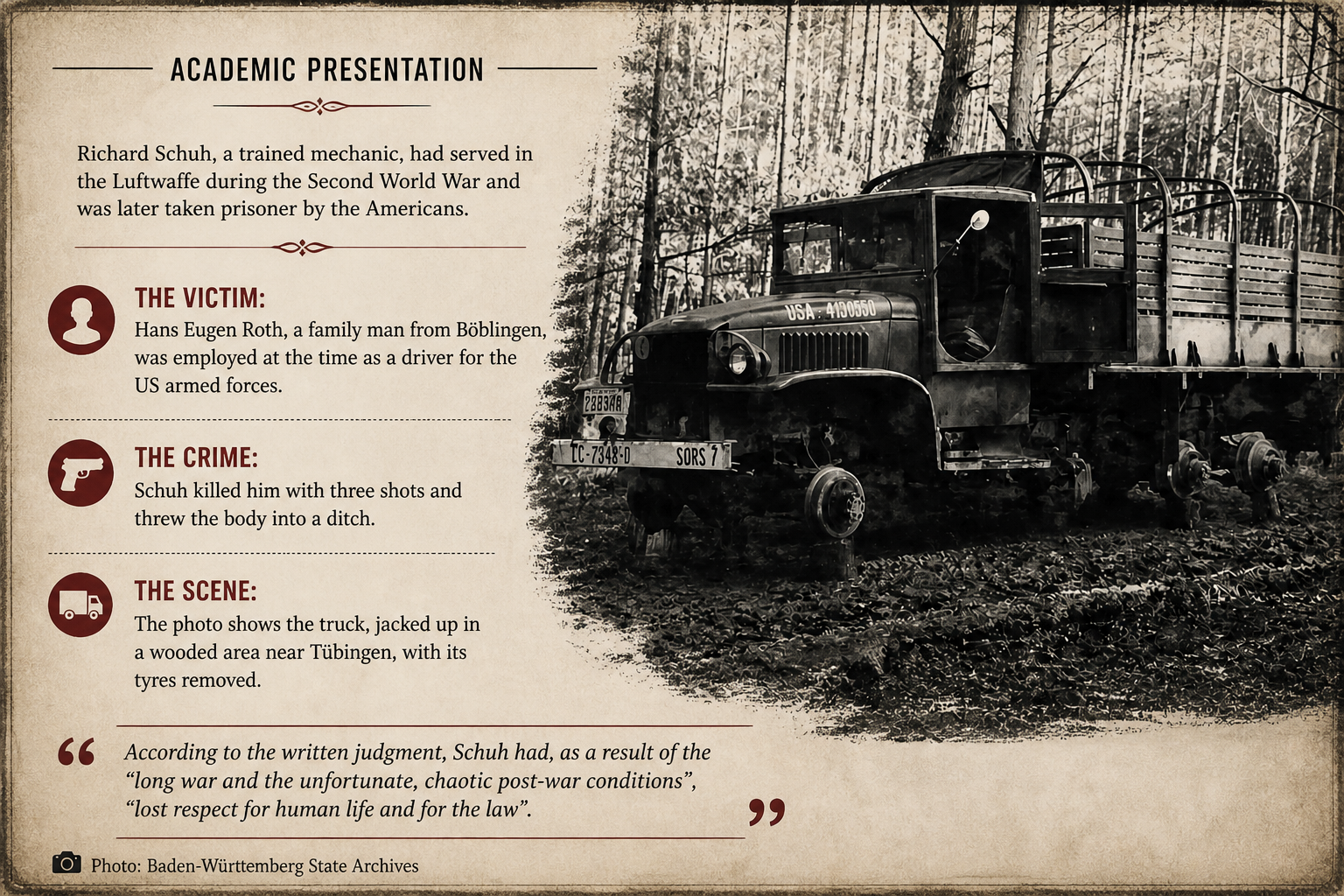
According to the written judgment, Richard Schuh had, through the cumulative toll of the “long war and the unfortunate, chaotic post-war conditions”, gradually “lost respect for human life and for the law” – a chilling portrait of a man whom violence had already hollowed out long before he pulled the trigger.
Schuh’s appeal, as well as pleas for clemency from close relatives and even the director of the prison where Schuh was being held, were to no avail: the decision to commute the sentence to life imprisonment lay in the hands of the President of Württemberg-Hohenzollern, Gebhard Müller, a supporter of the death penalty.
Schuh was executed by guillotine at six o’clock in the morning on 18 February 1949 in the courtyard of the prison at Doblerstraße 18 in Tübingen. The small-town hall bell was rung during the execution. Schuh himself had only learnt of this the evening before. Schuh’s body was handed over to the Anatomical Institute of the University of Tübingen. The guillotine is on display at the Ludwigsburg Prison Museum.
Tübingen in 1949 was not merely a place of execution, but a symbol of post-war Germany’s profound struggle to reconcile legal order with humanity – the last judicial hanging on German soil took place here, prompting a national reckoning that ultimately contributed to the abolition of capital punishment in the Federal Republic.


Source of photos: Spiegel (2019). Todesstrafe für Richard SchuhChronik einer angekündigten Enthauptung. URL: https://www.spiegel.de


