
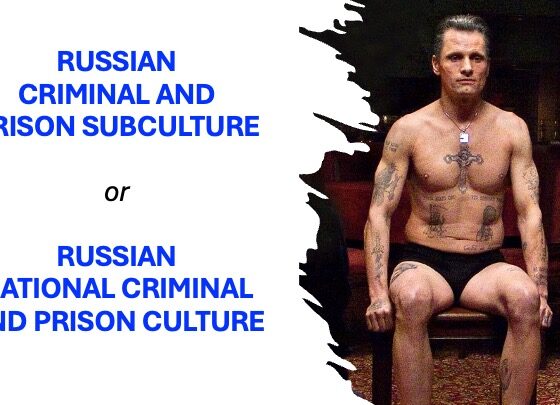
Dmytro Yagunov: Informal prison hierarchies in the 21 century: subculture, trends and social control (The 2025 Annual Conference of the European Society of Criminology)
In this study, we raise the issues of the origins of Soviet criminal and prison subculture, the corresponding informal prisoner hierarchies, and the

Dmytro Yagunov: Russia Set Out to Denounce the Convention Against Torture Long Before the Full-Scale Invasion
At the link below, anyone can see exactly how Russia cooperated with the Council of Europe within the framework of the European Convention

Ukrainian Ombudsman: Torture is Part of the Russia’s State Policy
The announcement of Russia’s plans to withdraw from the European Convention for the Prevention of Torture is an official removal of the last

Tinatin Uplisashvili: The Shadow Сode – How Informal Prison Pierarchy Undermines Human Dignity Across Post-Soviet Prisons
In this expert blog, PRI’s Tinatin Uplisashvili explores the persistence of informal prison hierarchies across post-Soviet penitentiary systems, structures that continue to shape

“Schwäbische Bastille”: from Celtic Fortress to the CPT visits
Hohenasperg, located in the federal state of Baden-Württemberg near Stuttgart, Germany, of which it is administratively part, is an ancient fortress and prison

The CPT Held Its 117th Plenary Meeting rom 30 June to 4 July 2025
The European Committee for the Prevention of Torture and Inhuman or Degrading Treatment or Punishment (CPT) held its 117th plenary meeting from 30

CPT Carries Out a Visit to Moldova, Focusing on Prisons
A delegation of the Council of Europe’s Committee for the Prevention of Torture and Inhuman or Degrading Treatment or Punishment (CPT) carried out

Council of Europe Anti-Torture Committee Visits Ukraine
A delegation of the Council of Europe’s Committee for the Prevention of Torture and Inhuman or Degrading Treatment or Punishment (CPT) carried out