0
0
 0
0
For the first time in more than a century, Japan has overhauled its prison system with new rules placing greater emphasis on rehabilitation over punishment to combat the country’s high recidivism rates.
The new system, which took effect in June 2025, marks the first time that correctional facilities have undergone a reform in 118 years. Individuals subject to the new rules are those who commit crimes after the law’s implementation.
A Penal Code amendment passed in 2022 removed the distinction between imprisonment with labor and that without. This means prison labor is no longer mandatory, which allows more time for educational and rehabilitative programs aimed at reducing recidivism.
Previously, inmates were handled largely based on their risk of reoffending — a system that opened up the possibility of elderly repeat shoplifters being treated similarly to organized crime figures.
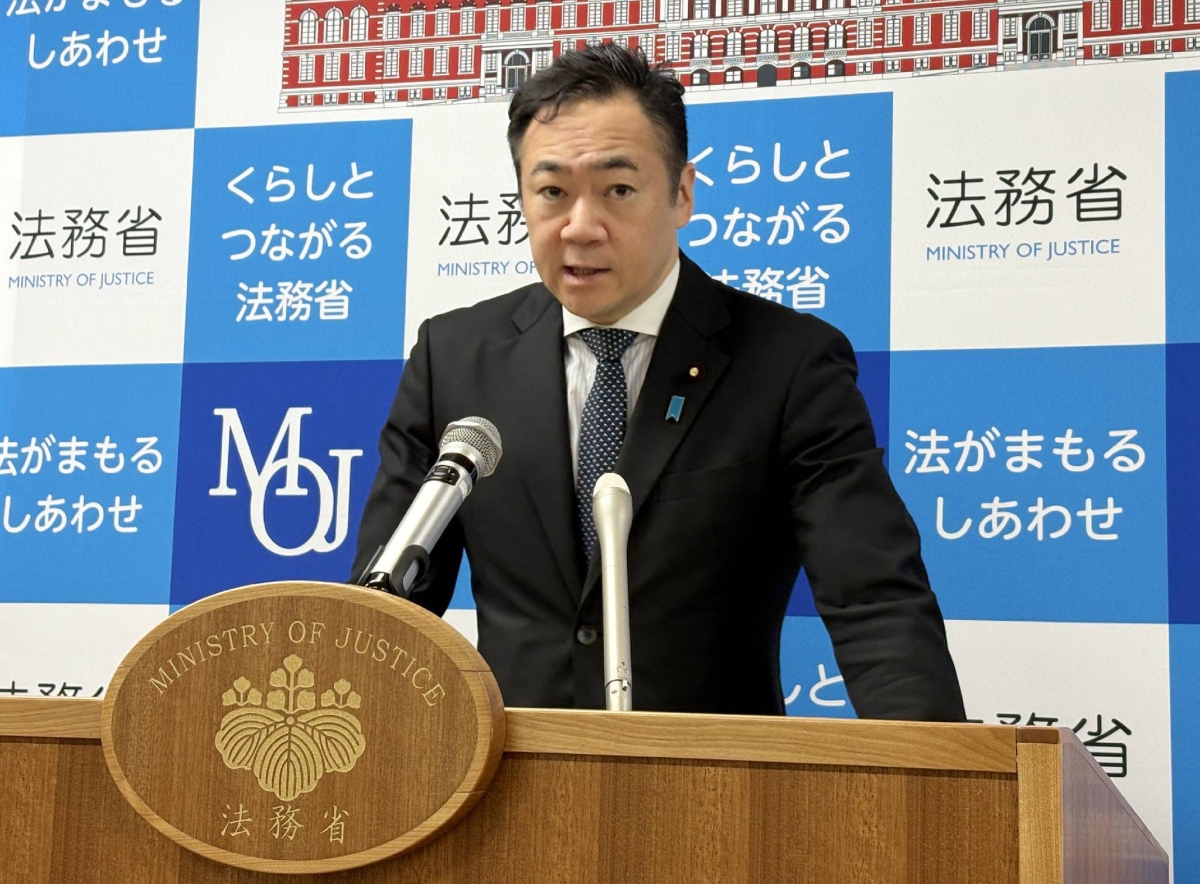
In a news conference, Justice Minister Keisuke Suzuki said that the new policy is designed to reduce recidivism and that preparations for the changes are being actively made at each correctional facility.
“It is expected that the introduction of (the Penal Code revision) will further advance crime prevention in Japan, and it will be important to implement initiatives that reflect this intent moving forward,” Suzuki said.
“We will continue to advance efforts to achieve more effective treatment for the rehabilitation and reintegration of inmates into society, with the aim of realizing a society in which every citizen can live safely and securely.”
The current law now defines imprisonment simply as “confinement in a penal institution,” with inmates to be assigned either “necessary work” or “necessary guidance” for their rehabilitation and improvement.
The change was prompted by the country’s persistently high recidivism rates. According to a Ministry of Justice report in 2023, the rate stood at 47%, with repeat offenders accounting for about half of all arrests in recent years.
Under the previous system of imprisonment with labor, inmates were often burdened with mandatory work, leaving insufficient time for guidance aimed at reformation.
Yuko Shiota, an official at the Center for Prisoners’ Rights who is in contact with current and former inmates, said the organization welcomes the changes and commends the ministry for recognizing the need for change.
The new framework will also implement an approach that combines work and guidance tailored to the characteristics of inmates by categorizing them into 24 groups according to age, background and individual needs.
These include a “Daily Care – Senior” program for inmates 70 and older with dementia and “Addiction Recovery” for those with drug dependencies. Other programs are designed for adults age 20 to 26, and those serving sentences of 10 years or more.
Older inmates will focus on maintaining physical and cognitive function, while younger prisoners may take part in education programs to support reintegration into schools after release.
According to Shiota, some groups — such as those involved in the disability rights movement or advocates — argue that such categorization is discriminatory.
Some point out “that since people with disabilities must live in a diverse society, it’s important for society to see and interact with them, or else discrimination will inevitably emerge,” she said, adding that she thinks it’s a valid point.
However, Shiota also acknowledged that in the specific context of prisons, things are different.
“When you have a mix of people, those with disabilities often move more slowly and struggle to complete various tasks. Because of that, they’ve often been subjected to bullying or punishment,” she said. As such, she thinks it is a good idea to separate them from everyone else in prison to keep them from continuing to be discriminated against because of their disabilities.
Shiota also expressed concerns about the significant pressure that correctional officers might come under due to their new roles.
“If you look at the official materials, it always says things like ‘understanding the inmate’s mental state’ or ‘responding according to each inmate’s individual characteristics,’ but even professional psychologists find that kind of work challenging,” she said.
“Expecting correctional officers to do it is really a heavy burden.”
That said, Shiota acknowledged it is still too early to judge how the changes will go, and that as a whole, it is a positive development that is welcomed by many who advocate for prisoners’ rights.
“I’m thinking of making recommendations once I’ve gathered enough information,” she said.
“I already receive many letters from people in prison asking for advice. I think I’ll receive letters from everyone later on saying things like, ‘Things have changed like this,’ or ‘This has started,’ so I’m thinking of (making recommendations) after reading those letters.”